


Optical Tweezer Systems
Precision manipulation at the microscopic level. Non-invasive trapping of dielectric particles, cells, and molecules for advanced biophysics and soft matter research.
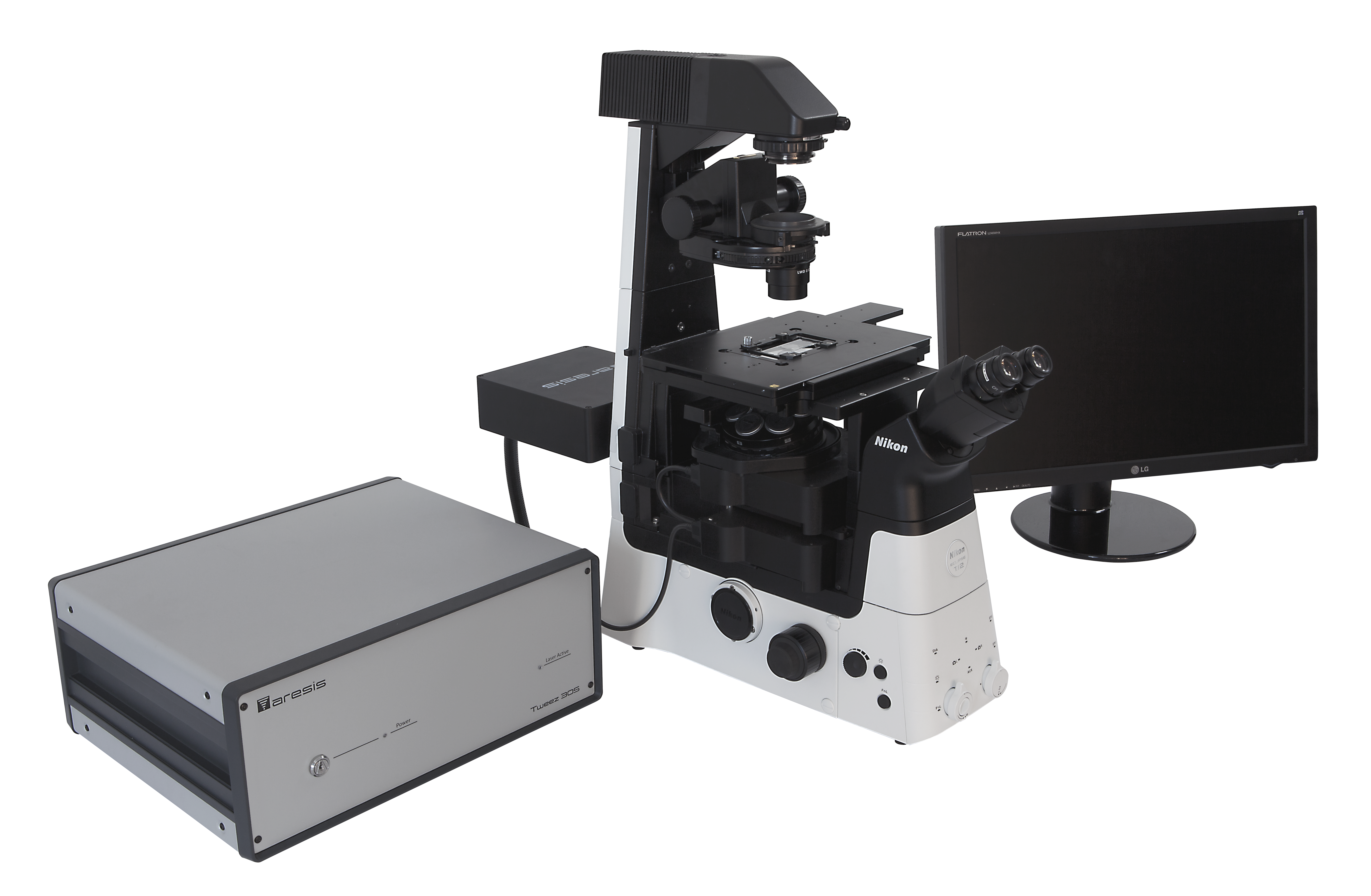

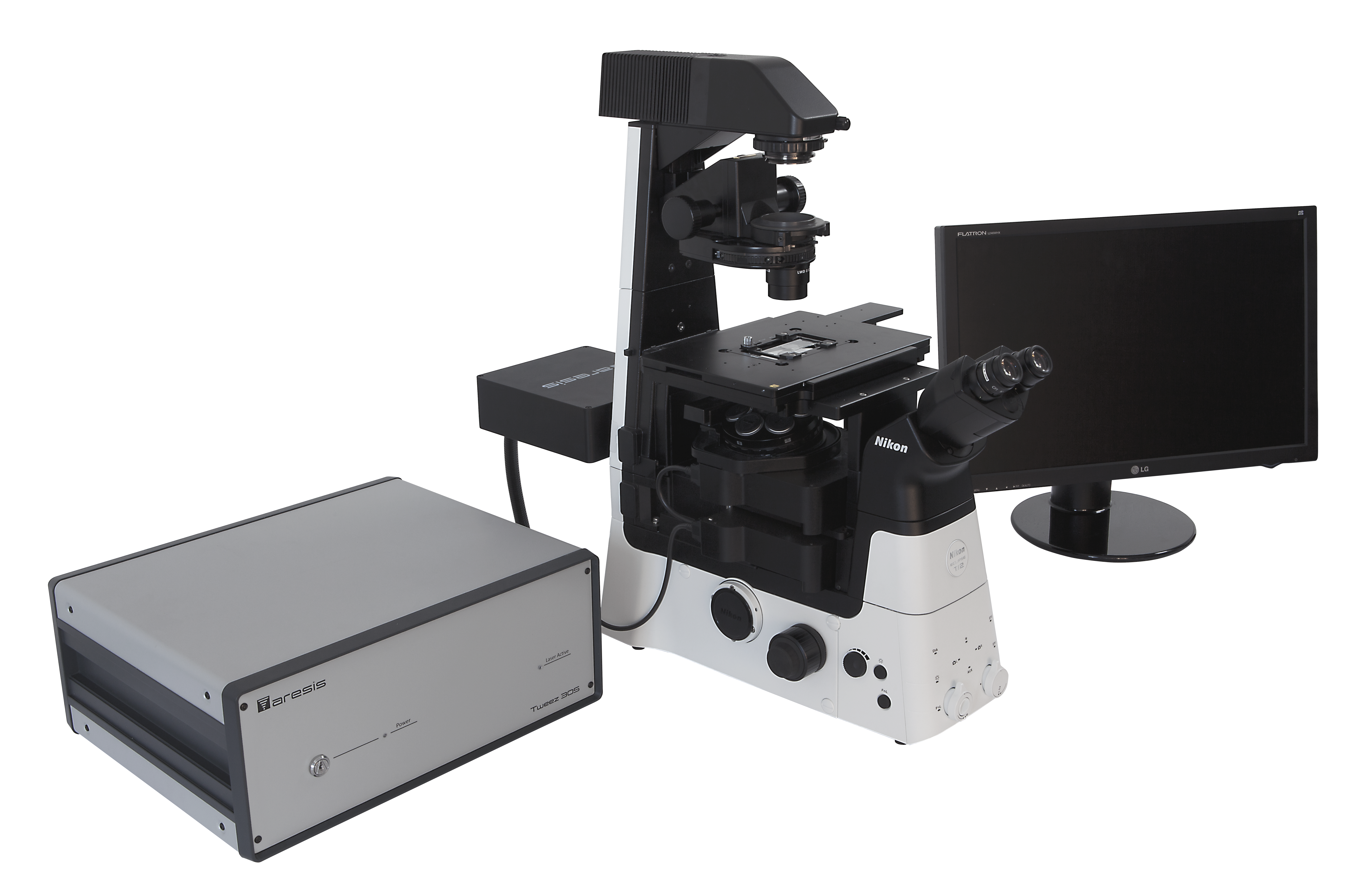
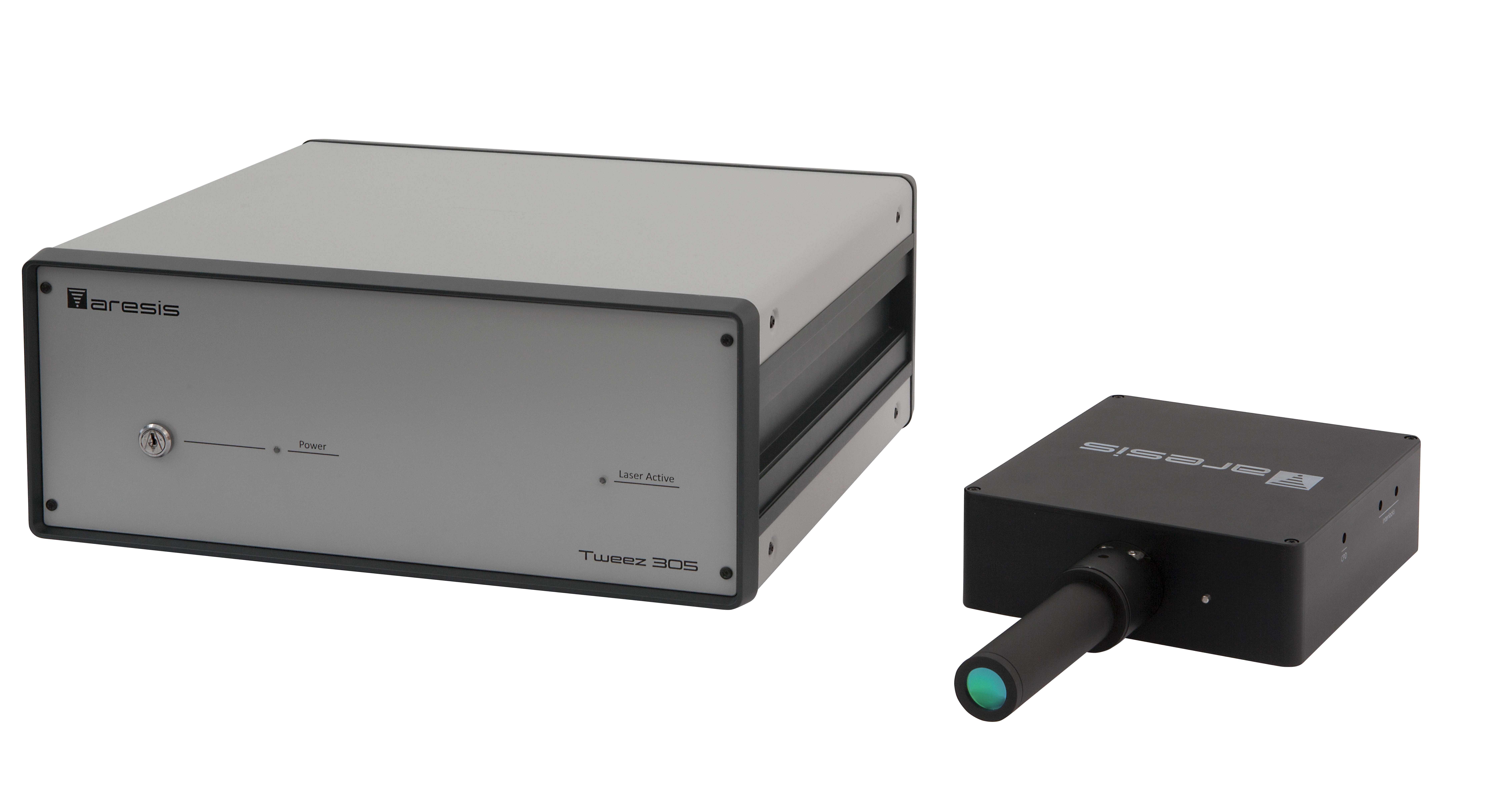
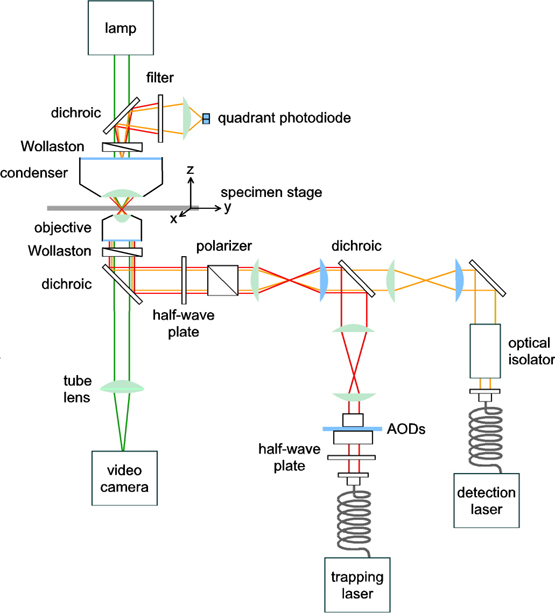
Aresis Tweez 305/310, a cutting-edge optical tweezer system designed to deliver high precision and accuracy. Ideal for researchers across various fields, this complete turn-key device is fully compatible with Nikon inverted microscopes, thus adding contactless manipulation and force measurements to the existing standard and advanced microscopy techniques. Tweez uses Acousto-Optic laser beam Deflector technology (AOD) to simultaneously achieve high speed and sub-nanometre precision. Open hardware and software architectures allow flexibility, customisation, and future upgrades according to customer requirements. With Automatic Calibration procedure in the GUI, the system automatically measures the optical transfer function of all optical elements, including microscope objective and Acousto-Optic Deflectors (AOD), across the entire working field. The highly configurable and robust hardware platform (Xilinx SoC FPGA) enables real-time generation of all control signals in the digital domain, offering unparalleled speed and precision. The sub-nanometer trap positioning at a 100 kHz trap-to-trap update rate makes Tweez the fastest device on the market.
Tweez App
Tweez App is pre-configured for a wide range of optical tweezer applications, including advanced particle tracking routines for camera-based force measurements. Its modular design and embedded Python facilitate easy expansion of functionality. An intuitive user interface ensures a steep learning curve and straightforward system operation.
Optical Unit
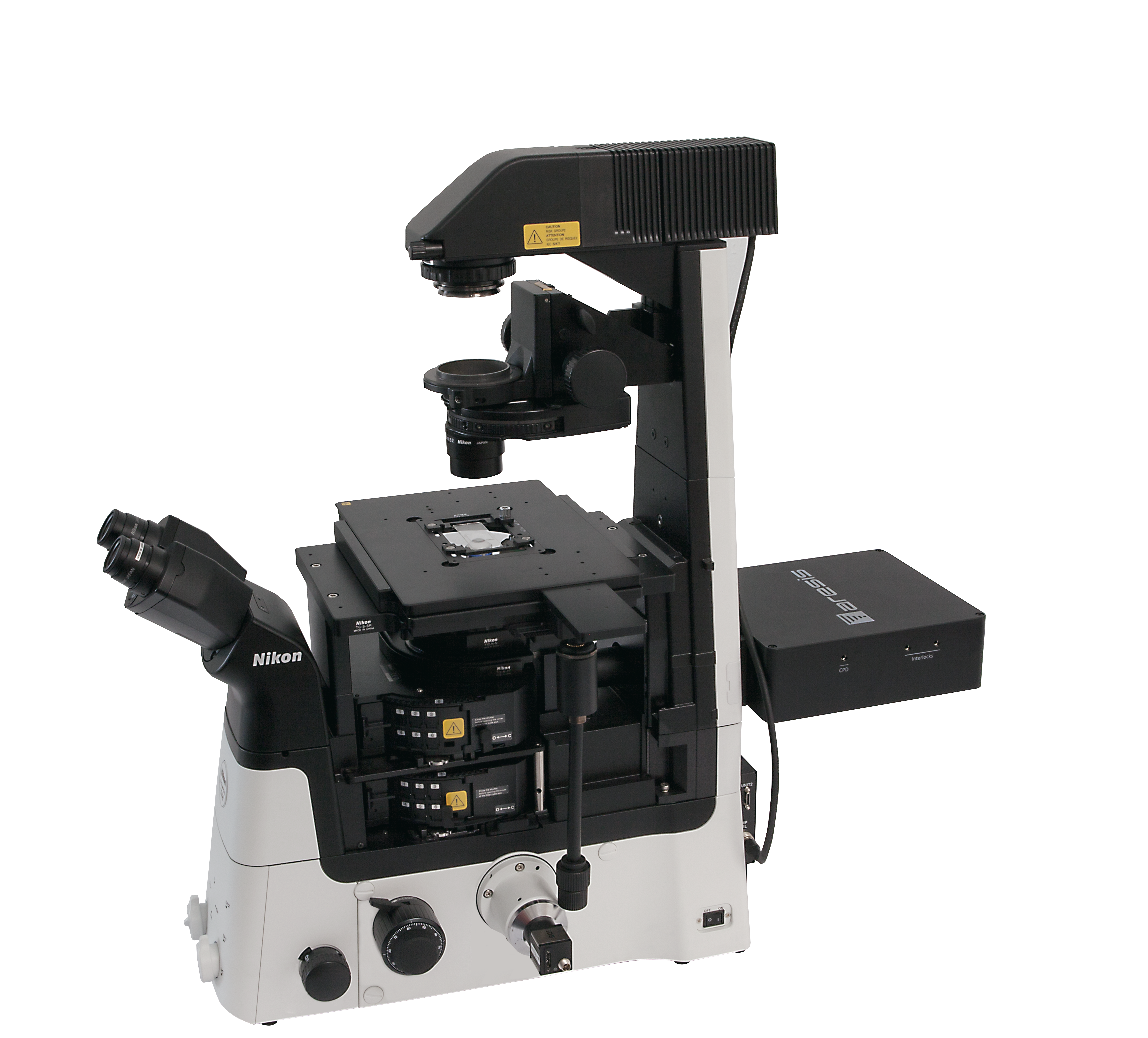
The optical unit, featuring all optical components, pre-aligned and packed in a compact, mechanically ultra-stable housing machined from a single aluminium block. This unique optical design, with its short optical and exceptional thermal and mechanical stability, ensures ultralow trap positional noise and drift and makes Tweez ideal for measuring forces with sub-piconewton precision. The optical unit attaches directly to the microscope epi-port.
Camera compatibility
The Tweez optical tweezer system can operate independently of a camera, with all trap movements and actions pre-programmed and executed by Tweez hardware. However, a camera is essential for real-time manual manipulation, initial experimental setup, and camera-based force measurement.
Tweez system is standardly equipped with a Ximea camera, using a 3rd Generation Sony CMOS Pregius 20 MP, offering excellent sensitivity and speed for brightfield imaging. For low-light applications, such as fluorescence or TIRF, we recommend and support scientific CMOS cameras from Teledyne Photometrics Prime and Kinetix families.
Camera-based force measurement module
Tweez features an integrated camera-based force measurement module uniquely designed to combine precise hardware-synchronized image acquisition with trap movement and powerful image processing. The module enables simultaneous measurement of forces on up to 20 particles in real-time, with a resolution better than 0.1 pN. An automated force calibration ensures precise and reproducible results every time. All optical signals for force measurement are collected through the microscope objective, making the method user-friendly and compatible with microfluidic chips, even thicker ones, or those lacking optical quality windows on both sides. The module provides live force information for quick insights during the experiment and records complete time-stamped video and trap data for offline analysis and archiving.
Ghost trap elimination
All AOD-based optical tweezer system can generate spurious ghost traps at high trap-to-trap switching rates. To avoid this artifact, Tweez employs a proprietary ghost trap elimination technique that significantly reduces ghost trap intensity to negligible level, even at the highest trap switching rates.
Laser Optical Tweezers
Laser Optical Tweezers, also known as Single-beam Gradient Force Trap, is a Bioanalytical instrument, which is based on the principle of light carrying momentum proportional to its energy and propagation direction. Optical tweezers are based on the fact that light has momentum and can exert optical forces on objects. When a laser beam passes through an object, it bends and changes direction (called refraction) and alters its momentum. This makes use of a highly-focused laser beam and focused through a microscope objective and focuses on a spot in the sample, including individual atoms to biological cells. The gradient force results from the intensity profile of the laser beam which acts as an attractive force, drawing the bead towards the region with greater light intensity. The same spot creates a Tweez (trap) and physically holds and moves microscopic dielectric objects. Manipulating the properties of the particle in a precise and contactless way.
When a particle is held in air or vacuum without any physical support, it is called optical levitation. The light exerts an attractive or repulsive force (in the order of piconewtons) on the particle. Particles (usually transparent dielectric spheres) with size ranges of micrometer such as fused silica spheres, oil or water droplets can be levitated using a focused laser.
Laser Optical tweezers have been used to trap Dielectric Spheres, Viruses, Bacteria, Living cells, Organelles, Small metal particles, and even strands of DNA. Two of the main uses for optical traps have been the study of molecular motors and the physical properties of DNA.
Research Domains
Enabling breakthroughs across diverse scientific disciplines.
Quantum Research
Quantum Computing: Using photons and trapped atoms as qubits to process information at massive scales.
Quantum Sensors: Cold atoms act as ultra-precise gravimeters and inertial sensors capable of measuring tiny changes in gravity, acceleration, or the Earth's rotation without relying on GPS.
Atomic Clocks: These systems harness atomic resonance to build clocks that lose less than a second over thousands of years.
Atomic Physics: Optical tweezers can trap and manipulate individual atoms, facilitating studies in quantum optics and quantum information science.
Quantum Cryptography: Building secure, unbreakable communication networks via quantum key distribution.
Cell Biology
Biological Sample Manipulation: They enable the non-invasive manipulation of cells and subcellular structures, allowing researchers to stretch, trap, and position biological samples with utmost precision or organelles without damaging them, enabling detailed studies of cellular processes.
Single Molecule Studies: Researchers use optical tweezers to study the mechanical properties of individual biomolecules, such as DNA, proteins, and motor proteins like kinesin and myosin.
Manipulation of Multiple Cells: Multiple cells can be simultaneously trapped and manipulated, paving the way for studies involving cell-cell interactions, tissue engineering, and the assembly of multicellular systems in vitro.
Cell Stretching and Trapping: We can trap individual cells and also stretch them gently. This capability has led to groundbreaking insights into cellular mechanics. By applying controlled forces to cells, scientists can investigate how they respond to mechanical stimuli, providing crucial information about cell adhesion, cytoskeletal dynamics, and the behavior of subcellular structures.
Molecular Biology
Controlled Movement and Positioning of Biological Samples: In Cellular and Molecular Biology, precise manipulation of biological samples are vital. Also to measure tiny forces on the order of piconewtons, making them useful for studying molecular interactions, such as the binding between proteins or the forces generated by molecular motors.
Single Molecule Biophysics
Measuring forces between individual biomolecules, controlled folding and unfolding of proteins, load-bearing kinetics of molecular motors, and stretching and twisting of DNA are just a few examples. Fully automatic force calibration ensures reliable and reproducible force measurements while the versatile setup enables compatibility with other optical techniques, such as fluorescence microscopy and total internal reflection fluorescence (TIRF), to provide complementary information about molecular interactions and dynamics in the piconewton force range.
Biophysics
DNA and Protein Stretching: By attaching microscopic beads to the ends of DNA or protein molecules, scientists can use optical tweezers to study the mechanical properties of these molecules, such as their elasticity and how they respond to force.
DNA and RNA mechanics: Measure elasticity, folding/unfolding dynamics, and the behavior of nucleic acids under tension.
Molecular motors: Track steps and forces generated by individual motor proteins like kinesin, myosin, and RNA/DNA polymerases.
Protein interactions: Study bond rupture forces and protein-ligand binding kinetics.
Soft Matter Physics
Colloids, liquid crystals, active matter, extracellular matrix, micelles, flexible polymers – all examples of soft matter that can be investigated, manipulated, and evaluated by optical tweezers. With the nanometre-precision, simultaneous positioning of several hundreds of optical traps, and a high degree of automation, and is ideal for probing viscoelastic properties of materials, studying inter-particle interactions, measuring piconewton forces acting on particles, and exploring phenomena like phase transitions, aggregation, assembly mechanisms, and colloidal statistical mechanics.
Colloidal Science: Assemble custom nano-structures, study phase transitions in soft matter, and measure ultra-weak forces down to the piconewton scale
Microrheology
Exceptional stability, high spatial and temporal resolution and advanced image acquisition, making it ideal for both passive and active Microrheology. It allows precise measurements of local material response using either a single oscillating microparticle or multiple probe microparticles. Both methods can be applied in a wide range of samples, including biological cells, polymers, colloids, and other complex soft materials. Equipped with an integrated direct video capture or quadrant photodiode (QPD) particle tracking system, enabling simultaneous sample observation and particle manipulation.
Physics
Microparticle Manipulation: In physics experiments, optical tweezers can trap and manipulate small dielectric particles, which helps in studying colloidal systems and nanoparticle dynamics.
Materials Science: To manipulate nanoparticles, colloids, and even single molecules. Researchers can investigate surface forces, study the assembly of nanomaterials, and explore the mechanical properties of microstructures.
Nanotechnology
Aids in the assembly of Nanostructures, Nanoparticles and Nanowires and to manipulate and position nanoparticles with high precision. Their ability to precisely position and manipulate these tiny components is indispensable for various Nanotechnology applications, including Microdevices.
Drug Delivery Research
Researchers use optical tweezers to study how nanoparticles or drug delivery systems interact with cells are used in diagnostic devices to manipulate cells and small particles in medical samples for analysis.
Microfluidics
Often integrated with microfluidic systems to control and manipulate particles in tiny fluid channels for research in biology, chemistry, and material sciences.
Aerosol Physics
Built-in functionality for particle tracking and system compatibility with controlled containment chambers make an indispensable for aerosol studies. Various processes, such as aggregation and coagulation, can be observed and investigated in biological aerosols (e.g. pollen or viruses) and industrial particles (e.g. pollutants or soot). Multiple traps enable the trapping of individual particles and the measurement of interparticle forces in highly controlled conditions. Incorporation of Raman or fluorescence spectrometers into the system enables individual analysis and characterisation of the trapped particles.
Latest Works
 Optical Tweezer
 Optical Tweezer
 Optical Tweezer
 Optical Tweezer
Need a Custom Setup?
Every lab is unique. Our engineering team will work with you to tailor the laser power, objective specifications, and detection modules to your exact experimental needs.
Contact Our Engineering Team